Electric Surfboard Battery Guide: Jetboard Range, Charging, and Care
Understand electric surfboard, motorized surfboard, electric surf board, and jetboard batteries, including range, charging, ride time, storage, and care.
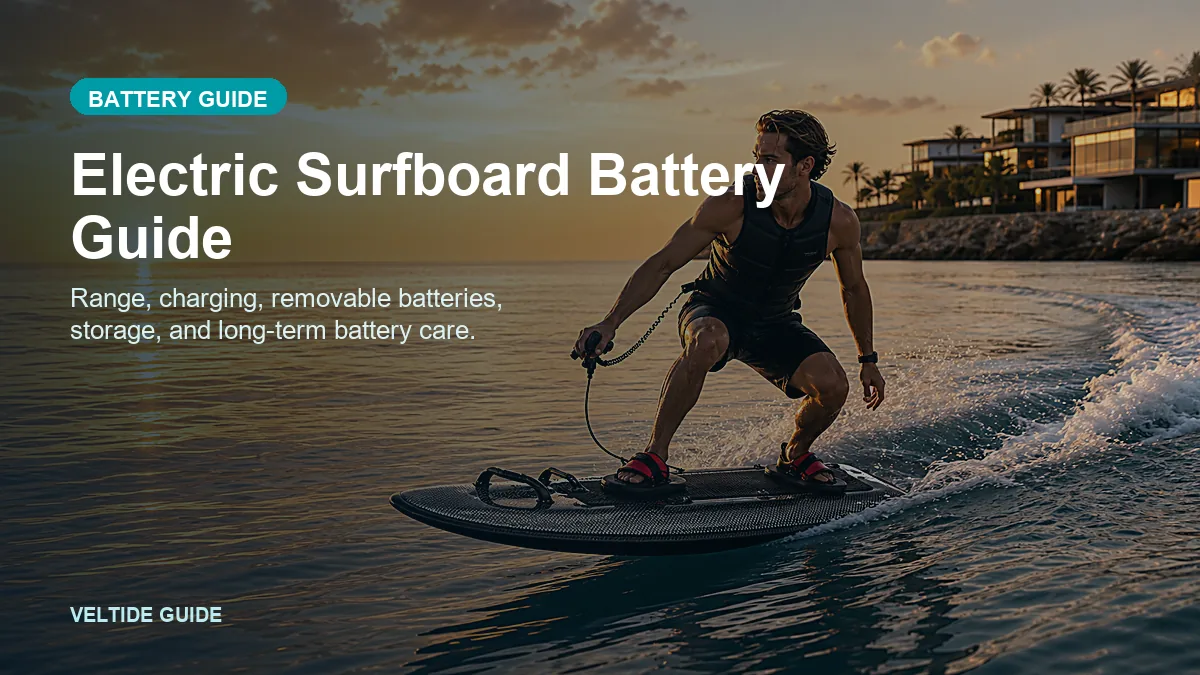
The battery is one of the most important parts of any electric surfboard. It affects ride time, acceleration, weight, charging routine, safety, and long-term ownership cost.
When comparing electric surfboards, jetboards, motorized surfboards, electric surf boards, or eFoil boards, it is easy to focus on speed and design. But if the battery system is not practical for your riding habits, the board may not fit your lifestyle.
This guide explains what to know about electric surfboard batteries before you buy.
Why the Battery Matters
An electric surfboard battery powers the motor and control system. It must deliver enough energy for acceleration while remaining safe, sealed, and reliable in a water environment.
A good battery system should offer:
- Useful ride time
- Stable power output
- Safe charging
- Water-resistant design
- Clear battery indication
- Practical removal and installation
- Long service life
Battery quality is not just about capacity. Design, protection, connectors, sealing, and cooling are also important.
Battery Capacity Explained
Battery capacity is often listed in watt-hours or kilowatt-hours. A higher capacity generally means more stored energy, but it can also mean more weight.
More capacity may improve ride time, but the real-world result depends on:
- Motor power
- Rider weight
- Speed
- Water conditions
- Riding style
- Temperature
- Board efficiency
This is why two boards with similar battery capacity can feel different on the water.
What Affects Ride Time?
1. Riding Speed
Full-throttle riding drains the battery faster. Smooth cruising usually gives longer ride time.
If you want longer sessions, use moderate speed and avoid constant hard acceleration.
2. Rider Weight
Heavier riders typically require more energy to accelerate and maintain speed. This can reduce ride time.
Always check the board’s recommended maximum load and choose a model that fits the rider.
3. Water Conditions
Calm water is more efficient. Chop, wind, current, and waves increase resistance and require more power.
Riding in rough water can reduce battery life even if your average speed is not high.
4. Temperature
Battery performance can change in very hot or cold conditions. Extreme temperatures can reduce efficiency and may affect charging safety.
Store and charge the battery according to the manufacturer’s instructions.
5. Riding Style
Aggressive carving, repeated starts, and high-speed runs consume more energy than relaxed cruising.
If you want the longest possible session, ride smoothly.
Removable Batteries
Many electric surfboards use removable batteries. This can be a major advantage because it makes charging, storage, and battery swapping easier.
Benefits of removable batteries include:
- Easier charging away from the board
- Ability to carry spare batteries
- Faster session turnaround
- Simpler inspection and maintenance
- Better long-term storage control
When comparing removable batteries, check weight, locking mechanism, connector protection, and sealing design.
Charging Time
Charging time depends on battery capacity, charger output, battery temperature, and current charge level.
Before buying, check:
- Standard charging time
- Charger input voltage
- Whether a fast charger is available
- Recommended charging temperature
- Battery storage recommendations
Do not use unauthorized chargers. Incorrect charging equipment can damage the battery and create safety risks.
Battery Cycle Life
Battery cycle life describes how many charge and discharge cycles the battery is designed to handle before capacity reduces significantly.
Battery life depends on how the battery is used and stored. Good habits can help extend service life.
Useful habits include:
- Avoid storing fully discharged
- Avoid extreme heat
- Let the battery cool before charging if needed
- Use the recommended charger
- Keep connectors dry and clean
- Follow long-term storage instructions
Battery replacement cost should be considered as part of long-term ownership.
Battery Safety
Electric surfboards use powerful battery systems. Proper handling matters.
General safety tips:
- Inspect the battery before use
- Do not use a damaged battery
- Keep connectors clean and dry
- Do not open or modify the battery
- Charge in a safe, dry, ventilated area
- Keep away from direct heat sources
- Follow shipping and storage instructions
If a battery smells unusual, becomes hot unexpectedly, swells, leaks, or shows visible damage, stop using it and contact support.
Salt Water and Battery Care
Salt water is harsh on electrical equipment. If you ride in salt water, rinse the board carefully with fresh water after every session and dry the connection areas before storage.
Do not pressure-wash sensitive connectors or force water into sealed areas. Gentle cleaning is usually better.
Planning Your Ride Around Battery Life
Before each session:
- Check battery level
- Confirm remote control charge
- Inspect the board
- Plan your route
- Avoid riding too far from shore
- Leave enough battery to return safely
Battery planning is part of responsible riding.
Final Thoughts
The battery is the heart of an electric surfboard. A good board should not only be fast; it should have a battery system that fits your ride time, charging routine, storage space, and safety expectations.
When comparing boards, look at the complete battery experience: capacity, charging, removability, cycle life, safety, and care requirements.
FAQ
How long does an electric surfboard battery last per ride?
Ride time depends on the board, battery capacity, rider weight, speed, water conditions, and riding style. Cruising usually lasts longer than aggressive high-speed riding.
Can I bring a spare electric surfboard battery?
Some boards support removable and replaceable batteries. If spare batteries are available, they can extend total riding time. Always use compatible batteries only.
Do jetboards and eFoil boards use the same type of battery?
Both use rechargeable battery systems, but the battery design, connectors, capacity, and installation method vary by product. Always use the battery designed for your specific board.
How long does it take to charge an electric surfboard?
Charging time varies by battery size and charger output. Always follow the manufacturer’s charging instructions.
Can I charge the battery immediately after riding?
In some cases, it is better to let the battery cool before charging. Follow the product manual for safe charging guidance.
How should I store an electric surfboard battery?
Store it in a dry, cool location away from extreme heat, direct sunlight, and moisture. Follow the recommended storage charge level in the user manual.