Electric Surfboard and Jetboard Maintenance and Safety Guide
Learn how to maintain an electric surfboard, electric surf board, motorized surfboard, or jetboard, including battery care, safety checks, jet intake cleaning, and storage.
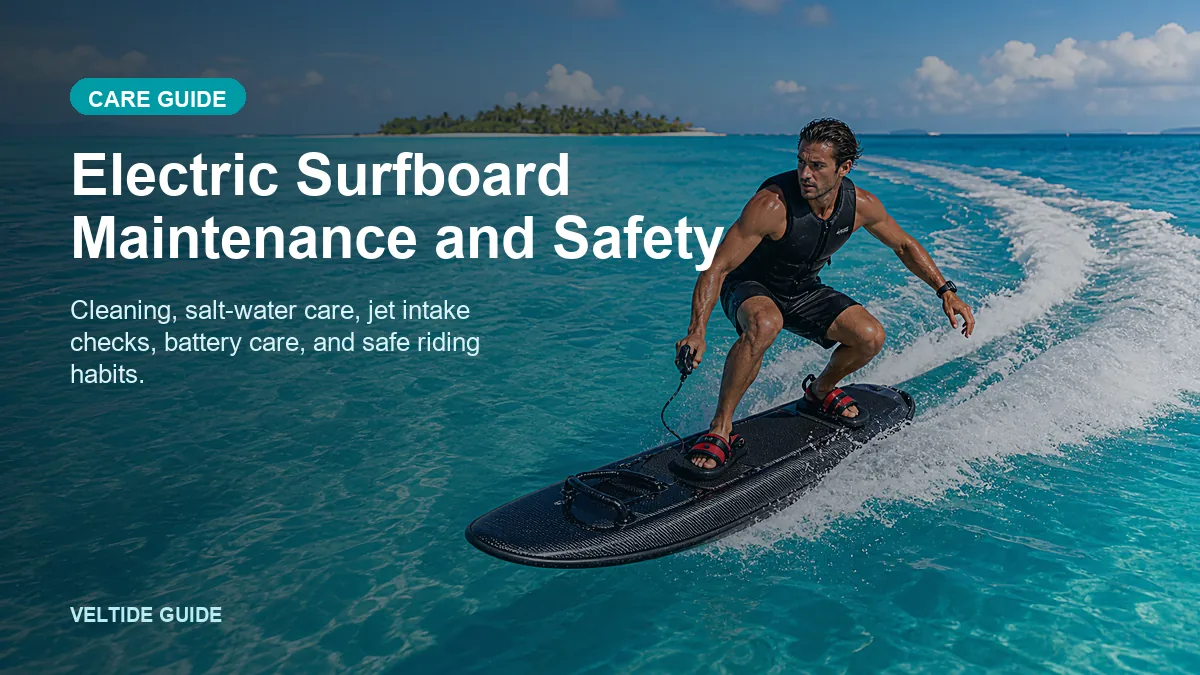
An electric surfboard is built for adventure, but it still needs proper care. Water, salt, sand, sun, impact, and battery use all affect long-term performance.
The good news is that electric surfboard maintenance is usually straightforward. A simple routine after every ride can protect the board, battery, remote, and propulsion system. The same thinking applies to a jetboard, motorized surfboard, electric surf board, or eFoil surfboard.
This guide covers practical maintenance and safety habits for electric surfboard owners.
Before Every Ride
A quick pre-ride inspection can prevent problems on the water.
Check the following:
- Battery charge level
- Remote control charge
- Battery connection and locking system
- Board surface and hull condition
- Foot straps or handles
- Leash or safety cutoff system
- Jet intake area
- Screws, seals, and visible fittings
- Local weather and water conditions
Do not ride if the board, battery, remote, or safety system appears damaged.
Choosing a Safe Riding Area
Electric surfboards should be used in suitable water conditions. The best learning environment is calm, open water with plenty of space.
Avoid:
- Crowded swimming areas
- Heavy boat traffic
- Rocks and reefs
- Shallow water
- Strong currents
- Debris and weeds
- Restricted zones
- Stormy or low-visibility conditions
Always follow local waterway rules. Some areas may require registration, permits, or specific safety equipment.
Safety Gear
At minimum, riders should wear a suitable life jacket or personal flotation device. Depending on speed, skill level, and local rules, additional gear may be useful.
Consider:
- Life jacket
- Helmet for high-speed or rough-water riding
- Wetsuit or impact vest
- Water shoes
- Whistle or signaling device
- Sun protection
Safety gear is especially important for beginners and high-speed riders.
Throttle and Balance Safety
Electric surfboards respond directly to throttle input. Sudden acceleration can surprise new riders.
Beginner riding tips:
- Start at low speed
- Keep knees bent
- Hold a relaxed stance
- Look in the direction you want to go
- Avoid sudden throttle changes
- Practice stopping early
- Turn gradually before trying sharp carving
Confidence comes from control, not speed.
After-Ride Cleaning
After each session, especially in salt water, rinse the board with fresh water. Salt and sand can shorten the life of components if left on the board.
Cleaning steps:
- Turn the board off
- Remove or secure the battery according to instructions
- Rinse the hull and deck gently
- Rinse around straps, handles, and jet intake
- Avoid high-pressure water near seals and connectors
- Dry the board before storage
- Check for damage after cleaning
Do not use harsh chemicals unless recommended by the manufacturer.
Jet Intake Care
The jet intake area should be inspected regularly. Weeds, plastic, rope, stones, or other debris can affect performance.
After riding:
- Check the intake area
- Remove visible debris carefully
- Do not insert tools aggressively into the propulsion system
- Stop using the board if you hear unusual noise or vibration
If the propulsion system feels abnormal, contact support before riding again.
Battery Care
Battery care is one of the most important parts of ownership.
Basic battery tips:
- Use only the correct charger
- Charge in a dry, safe area
- Keep connectors clean and dry
- Do not use a damaged battery
- Do not open or modify the battery
- Avoid extreme heat
- Store at the recommended charge level
- Follow long-term storage instructions
If the battery shows swelling, leakage, unusual smell, overheating, or visible damage, stop using it immediately.
Remote Control Care
The remote is exposed to water, sun, and impact. Treat it as an important control device, not an accessory.
After riding:
- Rinse gently if exposed to salt water
- Dry before storage
- Check battery level
- Inspect buttons and trigger
- Keep it away from extreme heat
- Use the wrist strap or safety connection when riding
A reliable remote improves both performance and safety.
Storage
Store the board in a dry, shaded location. Avoid leaving it in direct sunlight for long periods.
Good storage practices:
- Dry the board before storage
- Remove the battery if recommended
- Store the battery separately in a safe area
- Keep away from sharp objects
- Avoid heavy items on top of the board
- Protect from freezing or extreme heat
- Check the board before the next ride
Long-term storage should follow the product manual, especially for battery charge level.
Transport
Electric surfboards are heavier than traditional surfboards. Transport them carefully to avoid damage.
Tips:
- Use padding during car transport
- Secure the board without crushing the hull
- Remove the battery if recommended
- Avoid dragging the board across rough surfaces
- Use help when lifting heavy boards
- Protect the remote and charger separately
Damage during transport can affect water sealing and performance.
When to Contact Support
Contact support if you notice:
- Reduced power
- Unusual vibration
- Water inside sealed areas
- Remote connection problems
- Battery warning signs
- Cracks or impact damage
- Charging issues
- Strange noise from the propulsion system
Do not continue riding if the board behaves abnormally.
Final Thoughts
Electric surfboard maintenance is about consistency. A few minutes before and after each ride can protect your investment and make every session safer.
Ride in suitable conditions, clean the board properly, care for the battery, and inspect key parts regularly. Good habits make the experience smoother, safer, and more enjoyable.
FAQ
Do electric surfboards need maintenance?
Yes. They need basic care such as rinsing, drying, battery care, connector inspection, and checking the propulsion system for debris.
Is jetboard maintenance different from eFoil surfboard maintenance?
Some care steps are similar, such as rinsing and battery care. A jetboard needs attention around the jet intake, while an eFoil surfboard also needs inspection of the mast, foil, and mounting hardware.
Should I rinse my electric surfboard after salt water use?
Yes. Rinse the board gently with fresh water after salt water use, then dry it before storage.
Can I pressure-wash an electric surfboard?
High-pressure water is not recommended near seals, connectors, battery areas, or electronic parts. Gentle rinsing is safer.
How should I store an electric surfboard battery?
Store the battery in a dry, cool place away from extreme heat, moisture, and direct sunlight. Follow the recommended charge level in the manual.
What should I do if the board makes an unusual noise?
Stop riding and inspect the board. Check for debris near the jet intake. If the issue continues, contact support before using it again.